Cheap Labour
will not save
YOUR Apparel Factory.
A Smarter Factory will.

I help apparel manufacturers transform traditional operations into faster, smarter and more profitable Digital Lean Factories — combining data, AI, people development and practical shopfloor experience.
Tailor since 1984. Former Managing Director. Smart Factory Advisor.

Built on real factory leadership - trusted by apparel leaders and industry platforms
Logos and references represent selected professional experience, advisory work, speaking engagements and industry platforms.

01
Rising Labour Cost
Competing on low wages is becoming a dangerous strategy. The winning factories will manage every production minute better.
The Brutal Reality
02
Analog Chaos
Many factories look digital from the outside, but their core decisions still depend on disconnected files, manual reports and delayed information.
03
Slow Decisions
When data arrives too late, management reacts instead of steering. The factory becomes busy, but not necessarily better.
04
Hidden Waste
Waste is not only fabric, defects or waiting time. Waste is also unclear responsibility, bad planning, unnecessary coordination and decisions without facts.
Most factories do not have a technology problem.
They have a transparency problem.
Digital Lean Factory
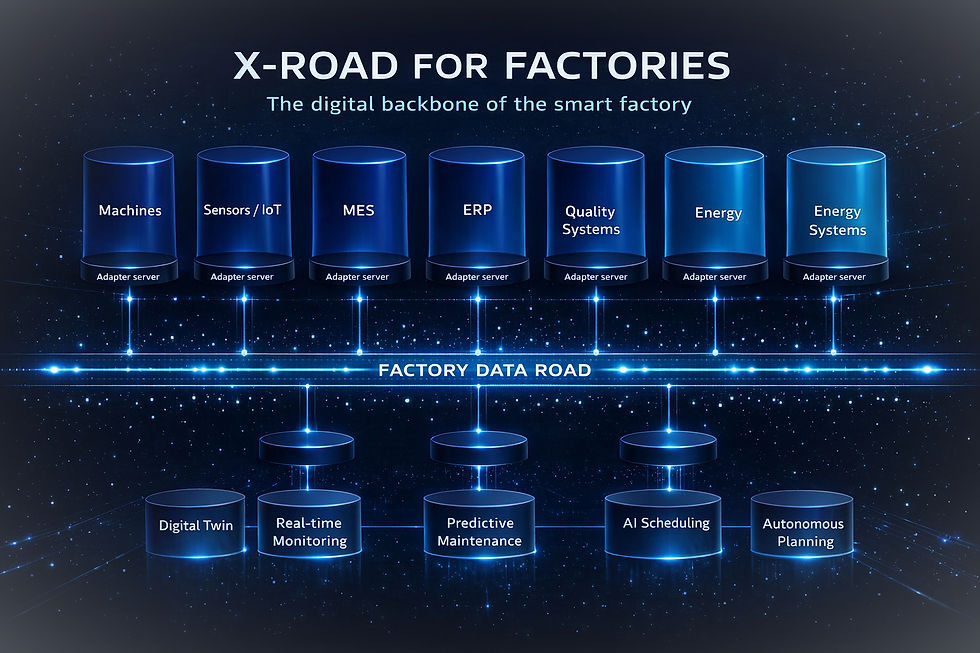
An integrated operating system connecting machines, people, and processes into a transparent decision environment.
- Real-time visibility
- Connected workflows
- Predictive decision-making
- Clear accountability
- Better resource utilization
You cannot digitalize chaos.
First you clean the analog mess.
Then connect it.
Then automate it.
Traditional Factory
Operating in isolated departments with delayed information.
- Departmental silos
- Delayed reporting cycles
- Post-hoc problem solving
- Disconnected planning
- Heroic management dependency
The problem is not that traditional factories do not work.
The problem is that they become too slow, too blind and too expensive for today’s market.
Check Yourself!
TEDx Talk · Industry 4.0 in Apparel Manufacturing
See the thinking behind the transformation
A talk on what it really takes to turn a traditional apparel factory into a smart, adaptive operation — from someone who actually did it.
See the Smart Factory Model

In my GEMBA walks I observe every factory through four dimensions:
Machines, People, Processes and Products.
Transformation only works when all four are connected.
Connect
Establishing the core digital infrastructure and real-time data flow between all factory assets.
Improve
Optimizing existing workflows and resource allocation through data-driven insights and Lean principles.
Predict
Utilizing AI and digital twins to forecast demand, manage inventory and anticipate bottlenecks.
Machines
Connect equipment, understand utilisation, reduce downtime and identify realistic automation potential.
machine data
utilisation
maintenance
People
Build skills, leadership routines and accountability systems that make transformation part of daily work.
skills
leadership routines
decision behaviour
Products
Understand how complexity, style mix and changeovers affect cost, flow and productivity.
complexity
changeovers
margin impact
Processes
Remove hidden waste, improve planning discipline and create faster feedback loops between shopfloor and management.
workflow
bottlenecks
planning accuracy
Digital transformation is not an IT project.
It is an operating model.
I do not start with software.
I start with the reality: where flow breaks, where decisions are delayed, where waste hides, and where money is lost.
How I Help
Strategic Transformation Advisory
I help owners and leadership teams turn transformation from scattered initiatives into a clear 3–5 year operating agenda — with priorities, leadership routines, milestones and measurable impact.
Focus Areas
Factory strategy
AI and digital roadmap
Operational excellence
Leadership development
Future organisation
Investment prioritization
Built on Real Apparel Experience

40+
Deep operational experience across product, production, operations and transformation.
Years in
Apparel Manufacturing
1984
Started as a Tailor
Learned the product and production from the inside. Fabric, Fit, and Craftsmanship
4,100
People Led
Led the most advanced apparel factory of HUGO BOSS

Global
Advisory Work
From strategy to implementation - turning vision into measurable action
International
TEDx and
conference Speaker
TEDx and industry conferences about Industry 4.0.
Leadership and Manufacturing Transformation
I did not enter apparel manufacturing through PowerPoint.
I started at the sewing machine, learned the product, understood production, led large teams and transformed factories from the inside.
Today, I use this experience to help manufacturers build the next generation of apparel operations.
Sharp Thinking for the Next Factory
01
The cheapest production minute is not the lowest wage minute. It is the best-managed minute.
True efficiency lies in the precision of your operations, not the cost of your labour.
02
AI without process discipline creates faster confusion.
Automation is only as good as the data it feeds on. Discipline is the foundation of intelligence.
03
A factory without real-time transparency is managed through hope.
Transparency is the only way to move from reactive firefighting to proactive leadership.
04
Digital twins are not a technology trend. They are a new level of operational truth.
Virtual mirrors of your physical reality provide the data required for predictive decision-making.
05
The future factory needs fewer reports and better decisions.
Information overload is the enemy of clarity. We prioritize what matters most to the shopfloor.
06
Smart Factory is not about replacing people. It is about making people more effective.
The future of manufacturing is human-centric. Technology should empower, not replace, talent.
